
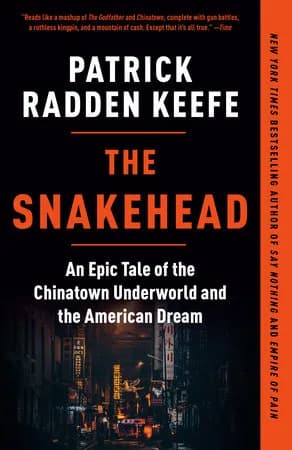
The Snakehead: An Epic Tale of the Chinatown Underworld and the American Dream
by Patrick Radden Keefe
Book Club Date:October 2026
📖 Book Summary
In 1993, a cargo ship ran aground off the coast of New York, carrying 286 undocumented migrants from Fujian, China. As passengers leapt into the freezing water and tried to swim ashore, many drowned. For them, the American Dream was within reach, yet separated from them by a deadly stretch of water. In The Snakehead: An Epic Tale of the Chinatown Underworld and the American Dream, American journalist Patrick Radden Keefe investigates the underground industry that smuggled Chinese migrants into the United States around the 1990s, beginning with this tragic incident. At the centre of the story is Cheng Chui Ping, better known as Sister Ping. Originally from Fujian, Sister Ping immigrated to the United States and eventually built an extensive human smuggling network in New York’s Chinatown. To American law enforcement, she was a criminal mastermind; to some members of her hometown and the Chinese community, however, she was someone who helped young people escape poverty and change their families’ futures. Through extensive interviews and years of investigation, Keefe weaves together the stories of migrants, gangsters, law enforcement and the American immigration system to create a gripping work of narrative non-fiction.
✍️ Reading Notes
If you have read Keefe’s Empire of Pain, you will recognise the narrative techniques that would later captivate so many readers: starting with a controversial figure and following multiple strands of investigation to gradually uncover the systems, interests and power structures behind individual lives. In his hands, a complex international smuggling network reads like a gripping crime epic. Yet the most compelling aspect of The Snakehead is the moral complexity of Sister Ping herself. She built a smuggling network and profited from it, while many people endured dangerous journeys and crushing debts. Yet in the eyes of some people back home, she was also a benefactor who helped families escape poverty. Was she a ruthless criminal mastermind, or someone who opened a door to a better life for others? Understanding why people admired her does not mean excusing her crimes. For many migrants, leaving home represents a chance to improve their families’ lives. But when legal routes are limited and economic pressures are severe, that hope can become a source of profit for underground businesses. A willingness to take risks does not mean migrants consent to exploitation, nor does it mean they should bear all the consequences. The American Dream promises that people can change their circumstances through hard work, yet its borders remain difficult for some to cross. This gap can create opportunities for illicit markets to thrive. None of this absolves criminals of responsibility, but it prompts a deeper question: what economic conditions and immigration policies make such a dangerous business profitable? Looking at Taiwan, we can also draw connections between the book and the experiences of migrant workers. Taiwan’s legal migrant worker system is different from the smuggling networks described in the book, but recruitment fees, debt, working conditions and labour rights remain important concerns. When society relies on migrant workers to sustain its industries and care sector, yet tends to view them merely as labour or a management challenge, do we truly recognise why they leave home—and what they sacrifice to do so? This is the power of narrative non-fiction: connecting history with the present and helping us understand problems that continue to unfold today.
💬 Discussion Points
- 1Sister Ping helped many people change their lives, yet also profited from their hardships. How should we understand the respect she received in her hometown? Can we understand her circumstances while still holding her accountable for her actions?
- 2When someone risks everything to improve their family’s future, to what extent are their choices constrained by economic hardship and social circumstances?
- 3Looking at Taiwan and global migration through the lens of The Snakehead: When countries depend on migrant workers but restrict their mobility and rights, how should societies balance border control, labour needs and human rights?