
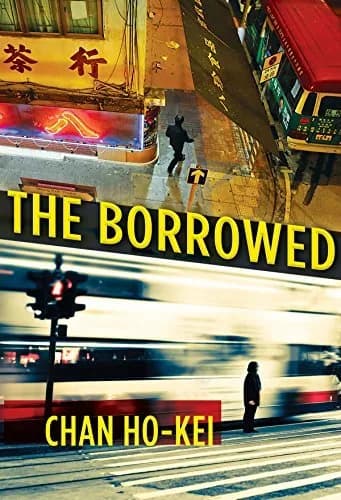
The Borrowed
by Chan Ho-Kei
Book Club Date:September 2026
📖 Book Summary
Hong Kong writer Chan Ho-kei’s crime novel 13・67 follows the career of a legendary detective, using six cases to trace nearly half a century of social change in Hong Kong. The numbers in the title refer to 2013 and 1967, respectively. Told in reverse chronological order, the novel centres on Kwan Chun-dok, a legendary figure in the Hong Kong Police Force, and his protégé, Lok Siu-ming. The stories unfold against key historical events, including the 1967 leftist riots, the 1977 police–ICAC conflict, the 1989 Tiananmen Square protests, the 1997 handover of Hong Kong, and the social upheaval of 2003. Each case presents a mystery of its own, yet together they gradually reveal the character of an entire city. The novel combines two traditions of detective fiction: the classic puzzle mystery, which focuses on clues, logic and ingenious twists, and social crime fiction, which explores the human nature, institutions and social conditions behind criminal acts. By bringing these two approaches together, Chan invites readers not only to uncover the truth behind each crime, but also to witness how Hong Kong has evolved amid shifting power structures, competing interests and conflicting values.
✍️ Reading Notes
Detective fiction often invites us to solve a mystery alongside the detective. 13・67, however, poses an additional question: if a police officer spends his entire life pursuing justice, how does he come to define what justice means? The novel begins in 2013, when Kwan Chun-dok is gravely ill and no longer able to investigate cases in person. His protégé, Lok Siu-ming, must find an unusual way to seek his advice. As the narrative moves backwards through time, readers gradually discover the experiences that shaped the legendary detective. The reverse chronology also brings Hong Kong’s history into sharper focus. The political conflict of 1967, the campaign against police corruption in the 1970s, the Tiananmen Square protests of 1989, the handover of 1997 and the social and economic upheaval of 2003 all leave their marks on the cases. These events are more than historical references scattered throughout the novel. They remind us that crime never occurs against a blank backdrop. The distribution of power, changes in society and the way institutions operate can all influence people’s choices and their understanding of right and wrong. Another question runs throughout the novel: should the police remain loyal to the law, follow orders from their superiors, or pursue the justice that the public needs? Kwan Chun-dok does not always follow established procedures. He values evidence and logical reasoning, yet when the system fails to deal with a problem adequately, he sometimes operates at the edge of the rules. This dilemma is particularly acute when it comes to the police, who wield powers granted by law and should therefore be subject to especially strict accountability. The novel shows how institutions can stand in the way of justice, but also how an individual’s belief in justice can become an excuse for abusing power. There is no clear-cut boundary between the two, and this is precisely what makes Kwan’s career worth examining. In its review, the Leeds Centre for New Chinese Writing also highlights the moral dilemma that recurs throughout the novel: should the police obey orders, or should they challenge the rules when doing so is necessary to protect the public? Another layer of complexity comes from Hong Kong itself. Between British colonial rule, the handover to China and the political changes that followed, Hong Kong people have continually found themselves caught between competing centres of power. When the police are required to enforce institutional directives while also being expected to protect the public, these responsibilities can come into conflict. When the legal system begins to feel increasingly disconnected from the public’s sense of justice, how can the police maintain people’s trust? These questions concern more than law enforcement. They also touch on how a city understands its own identity, and who has the authority to define what justice means. By the end of the novel, looking back at the two years in the title, we can see them as the opposite ends of a timeline. The case set in 2013 reveals the legacy Kwan Chun-dok has left behind, while the story set in 1967 takes us back to the beginning of the journey that made him who he is. As time moves backwards, readers gain a deeper understanding not only of the clues behind each case, but also of how a person develops a moral code—and what that code may ultimately cost.
💬 Discussion Points
- 1What should we do when justice conflicts with the rules? If breaking procedure could protect an innocent person from harm, would you support doing so? How can we prevent people from abusing their power in the name of justice?
- 2How does a city’s history shape our understanding of crime? When a crime takes place amid political turmoil, institutional change or a breakdown of public trust, how should we distinguish individual responsibility from the influence of the surrounding circumstances?
- 3Why do we need to reassess our heroes? Kwan Chun-dok is regarded as a legendary detective, but does our judgement of him change as we learn more about his past? Is a person worthy of trust because of how many cases they solve, or because of the choices they make at critical moments?